The legal profession is rapidly changing. In the past, a lawyer could rely on a stable set of knowledge for years. Today, that’s no longer possible—especially in the IT sector. Digital products, new business models, and constantly evolving regulations require flexibility and continuous skill development.
IT Lawyer: A Profession That Requires Constant Growth
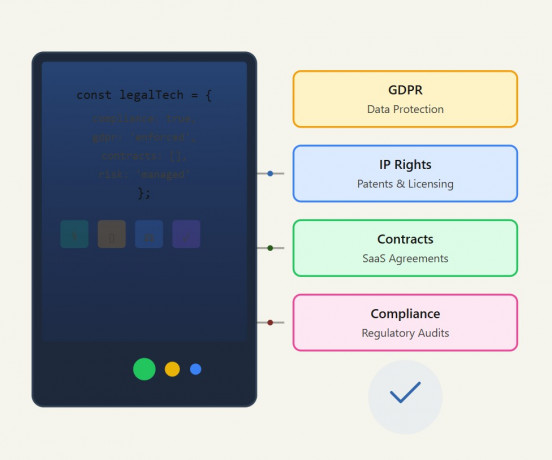
An IT lawyer is more than just a legal professional. It’s an expert working at the intersection of law, technology, and business. They help companies launch digital products, draft legal documents, protect intellectual property, and minimize risks.
One of the key features of this profession is the lack of ready-made solutions. There are no separate laws specifically for IT, so lawyers must adapt existing regulations to new realities. This requires not only experience but also continuous learning.
Technology evolves faster than legislation. New services, monetization models, and data-processing methods appear constantly, and lawyers must understand them to assess risks and provide sound legal solutions.
Why Continuous Learning Is No Longer Optional
For IT lawyers, learning is not a phase—it’s an ongoing process. There are several reasons why it is critical:
- Constant changes in legislation. Regulations on personal data, advertising, and intellectual property are frequently updated.
- Technological progress. SaaS, APIs, blockchain, and AI require at least a basic understanding.
- Growing business expectations. Companies expect lawyers to be part of product development, not just compliance.
- Market competition. The more актуальные and diverse a lawyer’s skills are, the more valuable they become.
In essence, a modern lawyer is a lifelong learner.
The Problem: Where to Find Knowledge
In practice, another challenge arises. There are many learning formats—courses, lectures, programs, internships—but finding the right ones can be time-consuming and inefficient:
- information is scattered across different platforms;
- it’s hard to assess the quality of courses;
- comparing options takes a lot of time;
- there is no clear understanding of which skills to prioritize.
As a result, lawyers spend more time searching for education than actually learning.
The Solution: A LegalTech Knowledge Base
This is where a LegalTech knowledge base becomes especially valuable—a structured space where information about IT-related legal education is collected and organized.
Its key advantage is systematization. Instead of relying on scattered sources, lawyers get:
- centralized information about learning opportunities;
- clarity on in-demand skills for IT lawyers;
- guidance for professional development;
- faster access to relevant educational formats.
This approach saves time and makes learning more strategic. Instead of randomly choosing courses, lawyers can build a clear development path.
Why It Matters Today
IT lawyers are in demand across industries: startups, banks, e-commerce, and traditional businesses undergoing digital transformation.
At the same time, expectations are rising:
- understanding technology;
- handling complex, non-standard cases;
- adapting quickly to changes;
- communicating effectively with business teams.
Without continuous learning, meeting these expectations is impossible.
The IT lawyer profession is one of the most dynamic areas in law. It offers great opportunities but requires constant growth.
In this context, it’s not just important to learn—it’s important to learn efficiently. A LegalTech knowledge base becomes a key tool that simplifies this process: it helps navigate educational resources, saves time, and allows lawyers to focus on what really matters—developing their expertise and solving real business challenges.