Recent reports show that Fusion API — one of the most advanced composite AI systems on the market — has achieved intelligence levels comparable to Fable while operating at roughly half the cost.
News about the Trump administration effectively pushing Anthropic’s flagship models, Fable 5 and Mythos 5, out of the market, along with ongoing criticism of Anthropic by U.S. Secretary of Defense Pete Hegseth, certainly attracts attention. However, such developments are likely to fade from public discussion over time. History shows that even major industry events, such as the failed OpenAI leadership crisis of 2023, quickly lose relevance in the news cycle.
A far more significant development may be OpenRouter’s publication of Fusion API benchmark results based on the concept of an “AI council” or model consortium. This announcement could have long-term implications for the future of artificial intelligence.
Andrew Trask, Senior Research Scientist at Google DeepMind and founder of OpenMined, described the results as highly important. In his view, companies building frontier AI models may no longer be able to maintain exclusive control over technological leadership. He noted that he had been waiting years to see results like these and considers them a major milestone.
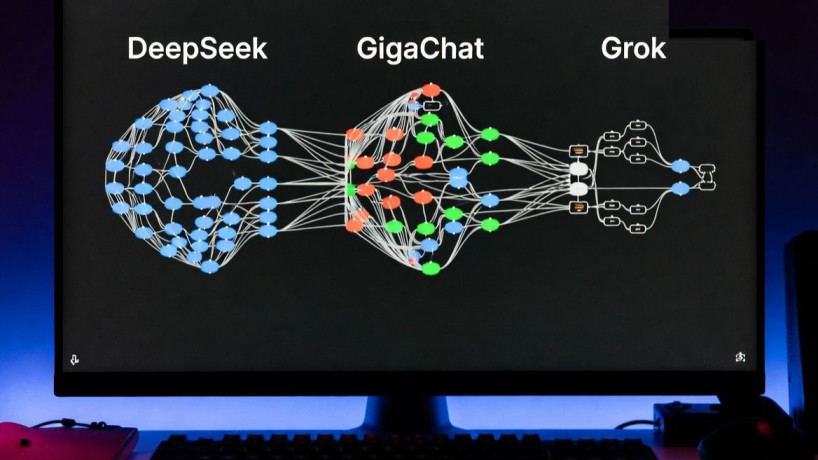
The idea behind Fusion API is straightforward. Several relatively inexpensive models — Gemini 3 Flash, Kimi K2.6, and DeepSeek V4 Pro — generate responses independently in parallel. A judge model, Opus 4.8, then evaluates the outputs, identifies agreements, contradictions, unique insights, and blind spots. Finally, a consolidated response is produced.
Using this approach, Fusion API achieved 64.7% on Perplexity’s DRACO benchmark, compared to Claude Fable 5’s 65.3%, while costing approximately half as much.
The logic behind collective intelligence is simple. Just as teams of experts often outperform even exceptionally talented individuals, a group of specialized AI systems can potentially produce better results than a single model operating alone.
Naturally, critics remain skeptical. Many experts point out that the advantages of multi-model fusion have so far been demonstrated primarily on a specific category of deep research tasks. Therefore, declaring a complete paradigm shift may still be premature.
Nevertheless, Andrew Trask’s detailed follow-up analysis emphasizes two key ideas:
- Frontier AI companies may no longer be the sole drivers of AI progress.
- In terms of cost, capability, and scalability, decentralized AI ecosystems may evolve faster than centralized solutions.
Among his most notable predictions are:
- a transition from open-source versus closed-source AI to network-based AI;
- a shift from company-level AI to globally coordinated intelligence systems;
- the rise of federated and decentralized AI architectures over centralized platforms.
This vision aligns with the broader idea that the next major leap in artificial intelligence may come not from building a more powerful standalone model, but from enabling collaboration between multiple specialized intelligent systems.
This approach can already be implemented on the Botman.one platform. The service allows users to build AI orchestrators composed of multiple models, assigning a specific role and responsibility to each one. For example, one model can perform research, another can challenge assumptions, a third can generate final content, and a fourth can verify facts. Botman.one is also integrated with OpenRouter, providing access to a wide range of modern AI models through a single interface and enabling advanced multi-agent and multi-model workflows without the need to manage complex infrastructure.
The practical takeaway is clear: the era of relying on a single “perfect” supermodel may gradually give way to collective intelligence architectures, where multiple specialized AI systems collaborate and amplify each other’s strengths.