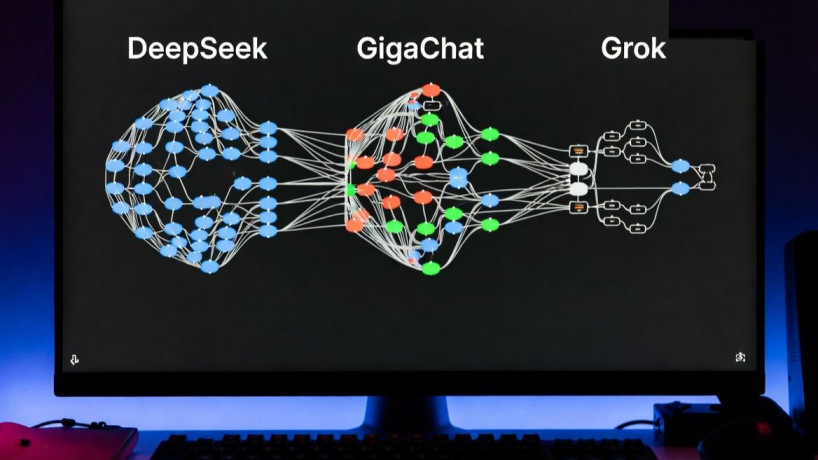
Artificial intelligence can save hours of routine work, but used carelessly it may gift you a reference to a non‑existent court ruling or give contradictory answers to the same question. The secret to safe and effective AI adoption lies not in picking the “smartest” model, but in designing the right interaction architecture. That is exactly what neural network orchestration on the low‑code platform Botman.one solves.
What Is Neural Network Orchestration and Why Lawyers Need It
Orchestration is an approach where several large language models (LLMs) work together within a single workflow, each with its own role. Think of it like a legal team: a junior associate drafts a contract, a compliance specialist reviews the risks, and a practice head finalises the document. On Botman.one, this logic is implemented through sequential no‑code scenario blocks — you simply configure prompts and data routing.
Why isn’t one model enough? A real‑world legal task — for instance, drafting a contract — consists of multiple stages: creating a structure, incorporating industry‑specific requirements, checking for logical inconsistencies, and final editing. When a single model handles all of these consecutively, it tends to lose context, contradict itself, or miss critical details. Splitting the process into separate roles, each assigned to a different model, yields a more stable and predictable outcome.
Practical Example: A Cross-Border Sale Contract Powered by Three Neural Networks
Consider a service that can be assembled in Botman.one’s visual editor in just a few hours:
-
DeepSeek — receives the input data (parties, subject matter, conditions) and generates an initial draft of a supply contract.
-
GigaChat — analyses the draft for compliance with currency control, tax, and customs regulations and produces recommendations.
-
Grok — compares both outputs, resolves any contradictions between them, and delivers the final version of the agreement.
Each model operates within its own area of responsibility. This three‑stage pipeline does more than accelerate document preparation — it embeds an “internal audit” into the process: the third model deliberately hunts for conflicts, risky wording, and terminological mismatches.
How Botman.one Enables Such Scenarios
The Botman.one platform gives lawyers three key capabilities to build neuro‑orchestrators:
1. Visual low‑code editor. The sequence of actions is assembled from ready‑made blocks: query an LLM, process the response, check conditions, pass data further down the chain. No programming — just prompt engineering and transition logic.
2. Out‑of‑the‑box support for many models. Botman.one is already integrated with OpenAI (GPT‑5.5, GPT‑5.5 Pro), Anthropic (Claude Opus 4.7), GigaChat, DeepSeek, Gemini, and others. Via ProxyAPI, you get access to top international AI providers along with automatic personal data masking — phone numbers, emails, passport details, and tax IDs are replaced with synthetic placeholders before the request is even sent to the model.
3. Built‑in document handling. The platform accepts files (PDF, Word, images), sends them to a neural network for analysis, and returns structured results — a table, JSON, or a finished document.
Typical Legal Scenarios for Orchestration
Here are processes you can automate by combining several neural networks in a single Botman.one scenario:
Contract drafting. A user enters the transaction parameters in a chatbot → Model 1 generates a draft based on a corporate template → Model 2 checks it for industry‑specific risks (currency clauses, sanctions restrictions, tax implications) → Model 3 compiles the final document with all amendments.
Incoming document review. The lawyer uploads a counterparty’s contract → Model 1 extracts the key terms → Model 2 highlights risky clauses (penalties, jurisdiction, unilateral termination) → Model 3 produces a structured legal opinion.
Litigation preparation. Model 1 formulates a legal position based on uploaded case materials → Model 2 attacks that position as the opponent, searching for weak spots and uncomfortable questions → Model 3 strengthens the arguments in light of the identified vulnerabilities. This allows you to simulate a court hearing before filing any documents.
Due diligence. Model 1 structures an uploaded batch of documents (letters, contracts, annexes) → Model 2 detects anomalies and risk areas → Model 3 generates an executive summary for the client.
Court decision parsing. A bot receives a PDF judgment → GigaChat extracts structured data: case number, parties, amounts, dates → the result is saved to Google Sheets or a CRM.
Risk Mitigation Through Smart Orchestration
Neural network orchestration on Botman.one is not only about efficiency but also about safety:
Against hallucinations. Role separation and the introduction of a reviewer model lowers error probability. If one model makes a mistake, the second is highly likely to catch it. Moreover, the platform lets you anchor models to trusted sources and impose a strict ban on inventing citations.
Against unpredictable results. Instead of relying on a single model’s answer, a scenario can send queries to several neural networks in parallel and compare the outputs. When conclusions align, reliability multiplies.
Against confidential data leaks. ProxyAPI on Botman.one offers two protection modes: automatic blocking of a request when personal data is detected, and synthetic replacement — sensitive values are swapped for placeholders before sending to the model and then restored in the response. For the most stringent requirements, the platform supports deployment on the company’s own server.
Against prompt injections. In a Botman.one scenario, you can restrict an agent to verified sources, preventing it from visiting compromised pages.
AI Won’t Replace a Professional—But an Orchestrator Will Make Them Super‑Efficient
It is crucial to remember: a neural network is a text generator and analyzer, not a lawyer. It lacks legal intuition and cannot read context and subtext the way a seasoned practitioner does. Asked by a client whether they should sue, it will spit out a detailed guide to filing a claim, while an experienced lawyer may advise abandoning a clearly loss‑making dispute.
The mission of an orchestrator on Botman.one is not to replace the lawyer but to shoulder the routine: drafts, standard checks, data structuring. The final decision always stays with the human. Botman.one lets you build such a neural‑network pipeline in days, not months, without involving programmers.
Ready to Build Your Own Neuro‑Orchestrator?
Botman.one is a low‑code platform that allows lawyers to create AI‑powered services without coding: chatbots, document generators, risk analysis systems, and full‑fledged multi‑LLM scenarios. Connect GigaChat, GPT, DeepSeek, Claude, Gemini and orchestrate their collaboration in a single process.
Start with a free trial at Botman.one and assemble your first AI service today.